CISD vs. Best Practices: Evolving Models of Critical Incident Care for Emergency Responders
For decades, emergency and disaster responders have faced the emotional and psychological weight of critical incidents with bravery—but not always with adequate support. As awareness around responder wellness has grown, so has the debate over how best to help our teams process traumatic events. Two prominent models have emerged: the traditional Critical Incident Stress Debriefing (CISD) model and the more flexible Best Practices model. Understanding their differences—and where Crisis Management Briefings (CMBs) fit in—can guide agencies in building healthier, more resilient teams.
The CISD Model: Origins and Concerns
CISD was developed in the 1980s by Dr. Jeffrey Mitchell as a structured, seven-phase group intervention, usually held within 24–72 hours after a traumatic incident. The intent was to reduce the likelihood of long-term psychological impact by giving responders a chance to process emotions in a facilitated setting.
While well-intentioned, CISD has received criticism in recent years for several reasons:
Inflexibility: Its rigid structure and timing don’t always fit the dynamic and unpredictable reality of public safety work.
Forced Disclosure: Group settings can pressure responders to share before they’re ready, which can do more harm than good.
Mixed Evidence: Research on CISD’s effectiveness is inconclusive, with some studies showing little to no benefit—or even increased distress for some participants.
As a result, many organizations have moved away from using CISD as a default intervention and toward more individualized, phased approaches.
The Best Practices Model: A Flexible, Responder-Centered Approach
The Best Practices model, often aligned with the principles of the International Critical Incident Stress Foundation (ICISF), the National Fallen Firefighters Foundation (NFFF), and trauma-informed care, favors a continuum of care rather than a one-size-fits-all response.
Key features include:
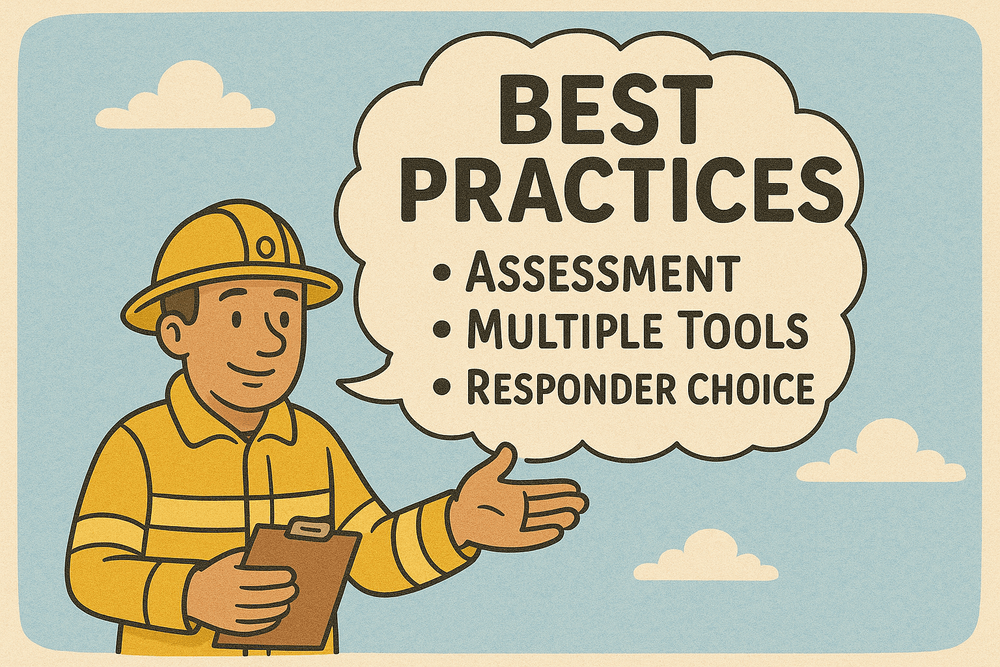
Assessment First: Rather than automatically deploying a formal debriefing, agencies assess the scope of the incident, the needs of the individuals involved, and the best timing for intervention.
Multiple Tools: Options might include one-on-one peer support, chaplain check-ins, defusings, family outreach, and referrals to licensed clinicians.
Responder Choice: Participation is always voluntary, with an emphasis on psychological safety and personal readiness.
This model reflects a growing understanding that processing trauma is not a box to be checked—it’s a process that unfolds differently for each person.
The Role of Crisis Management Briefings (CMBs)
One powerful tool in the Best Practices toolkit is the Crisis Management Briefing (CMB). Unlike CISD, CMBs are informational, not emotional processing sessions. They’re typically held for groups in the early aftermath of a critical incident—sometimes within hours.
CMBs serve several vital functions:
Dispel Rumors: Present accurate, vetted information to reduce fear and speculation.
Provide Guidance: Explain what to expect emotionally and physically in the coming hours and days.
Normalize Responses: Let responders know that feeling shaken, irritable, or numb is common and okay.
Offer Resources: Share clear pathways for accessing peer support, chaplaincy, or mental health professionals.
CMBs are especially effective in large-scale incidents or when multiple agencies are involved. They provide clarity and structure during moments of chaos without forcing emotional vulnerability.
Choosing the Right Tool for the Right Moment
There is no single “correct” way to respond to a critical incident. What matters most is thoughtful, trauma-informed leadership. CISD may still have value in some cases when facilitated correctly and voluntarily, especially with tight-knit teams. But the Best Practices model, anchored in assessment, flexibility, and choice, is now considered the gold standard for responder wellness.
By incorporating tools like CMBs early in the response and following up with peer support, check-ins, and tailored resources, we can move from crisis reaction to sustained resilience.
If you’d like to explore how our SHIELD Peer Support model or other wellness initiatives integrate these principles—or to schedule a Crisis Management Briefing for your agency—reach out to us at info@sc-rsi.org.
About the Author:
Tim Wojcik is a public safety chaplain, retired firefighter/paramedic, and the director of the South Carolina Responder Support Initiative (SC-RSI). With over three decades of frontline experience, he now focuses on building peer support, chaplaincy, and wellness programs for emergency and disaster responders across the state. Tim is passionate about creating spaces where responders feel seen, heard, and supported—not just in crisis, but in everyday life. Learn more about SC-RSI at www.sc-rsi.org.
 South Carolina - Responder Support Initiative
Leave a comment